cookbook (2)
RESEARCH EXCHANGE

How the ‘Making Displacement Safer’ Cookbook can help address gender-based risks in urban displacement

Author

About

Victoria Wachira, Monica Namanya, Juliet Tschank and Sadam Garad

research

Many forcibly displaced people live in cities, yet policy, funding, and data systems treat them as invisible—a gap that intersectional analysis, rights-based frameworks, and data-driven approaches are beginning to expose, as the East Africa Migration Academy’s discussions and Somalia’s ongoing urban displacement crisis illustrate.

The state of things

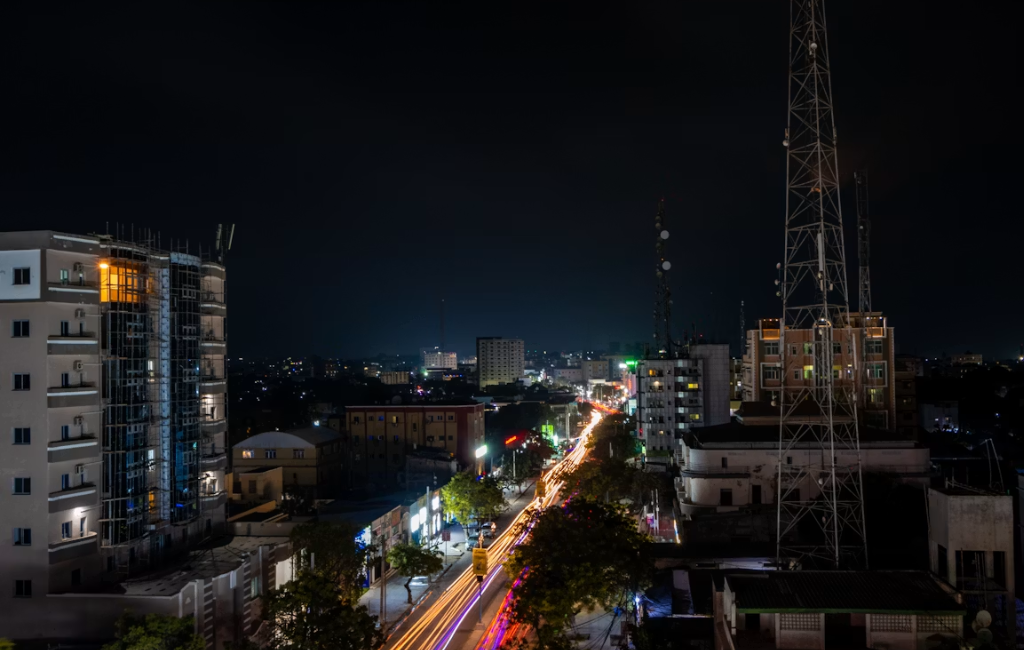
Most displacement discussions assume camps. Orderly rows of tents, clear vulnerability metrics, established humanitarian operations. But between 60–80% of forcibly displaced people live in cities, in informal settlements and informal work—largely invisible to aid systems designed to track camps, not neighborhoods In Somalia, more than 2,400 IDP sites exist, with 85 percent being informal settlements on private land in urban areas.


This invisibility has deadly consequences. In Mogadishu, close to 40,000 people—75% of them women—were evicted between January and July 2024. Single mothers face repeated displacement cycles, and private landlords and land-grabbers target vulnerable populations lacking clan protection networks. These are not random evictions. They follow patterns: gender determines risk. Clan affiliation determines protection. Documentation status determines access to services. These intersecting identities shape who stays and who is displaced.


The Global Network of Civil Society Organisations for Disaster Reduction (GNDR)’s Making Displacement Safer cookbook and emerging takeaways from the East Africa Migration Academy show how recognising these patterns and acknowledging displaced people’s lived reality can make this crisis visible—the first step toward solving it.


Understanding the patterns of urban displacement

The scale is staggering. Mogadishu alone hosts more than 1.16 million internally displaced people, about one-third of the city’s population, displaced mainly from Lower and Middle Shabelle. Across the region and globally, most displaced people live in urban areas, outside formal camps, beyond the reach of traditional humanitarian systems.


Yet most donor funding and policy attention focuses on camp-based responses. Displacement in cities looks different and is harder to track, but its structural drivers are clear. Conflict, climate, and economic collapse displace people. Then gender, clan affiliation, and documentation status determine who can rebuild and who gets trapped in protracted displacement.


The East Africa Migration Academy’s analytical framework on intersectionality helped us understand these patterns. GNDR’s Making Displacement Safer cookbook, tested across 11 countries including Niger, Congo, Rwanda, and South Sudan, shows how to address urban displacement effectively. The cookbook operationalizes intersectionality in three ways:


1. Centering displaced people’s own analysis of vulnerability. The cookbook emphasizes participatory mapping of resources, capacities, vulnerabilities, and risks, which helps communities identify needs that standard assessments can miss. It also stresses that displaced people, including marginalized groups, should be involved from the start in shaping responses.


2. Using Urban Living Labs to support shared decision-making. GNDR’s approach places displaced people, host communities, civil society, and authorities in continuous dialogue, with communities leading and stakeholders facilitating. This makes participation more than consultation and helps ensure responses fit local realities.


3. Tackling hazards and exclusion together in situ. The cookbook’s rights-based and inclusive approaches recognise that risk reduction must address social exclusion, inequality, and access to information alongside physical hazards.


 

How intersectional analysis can help address urban displacement

  1. Redefine urban displacement as a development and rights issue, not just a humanitarian one. Use intersectional analysis to understand who’s being evicted, why, and what identities shape their vulnerability. In Mogadishu, 75% of evictees are women. Cities need housing, livelihood, and social protection policy that explicitly includes displaced populations and centres their rights. Treat displacement data (or its absence) as a signal of failed urbanization planning and rights protection.
  2. Fund data collection that’s rights-based, not just needs-focused. Support civil society, for example through  GNDR’s Urban Living Labs methodology, to conduct baseline assessments that document not just vulnerability but also rights violations, eviction patterns, and discrimination. Somalia’s transition from counting IDPs to measuring “solutions progress” is the model. Make visible not just who’s displaced, but why systems are excluding them.
  3. Make informal settlement integration the default strategy, grounded in intersectional protection. GNDR’s cookbook documents in-situ approaches where communities stayed while hazard risks were reduced. In South Sudan, Root of Generations supported displaced people in Juba to establish small businesses—tailoring, food shops, clothmaking, produce stalls—within informal settlements. These enterprises generated up to $10 per week, enabling people to stay in place while building livelihoods. Critically, women and men leaders now participate in advocacy, articulating community concerns to national authorities about institutionalising localised approaches in national policy.⁴ Integration must also address why people are vulnerable to eviction: secure tenure, livelihood access, discrimination protection, and gender-based violence prevention must happen together, not sequentially.

Learn More


Juliet Tschank is a social scientist based in Austria, working at the intersection of social inclusion, migration, labour markets and education, using research to help make systems fairer and more responsive to vulnerable groups.


Monica Namanya is a PhD researcher at the Irish Centre for Human Rights, University of Galway, focusing on climate-induced migration, free movement and human rights.


Sadam Garad is a Senior Migration and Climate Affairs specialist at the Office of the Special Presidential Envoy for Migration, Returns, and Children’s Rights under the Office of the President of the Federal Government of Somalia. His work focuses on climate-induced migration, refugees, mixed migration movements, and human rights issues.


Victoria Wachira is a Nairobi-based Global Communications Specialist and founder of Africa Kesho, with a focus on climate-induced migration, just transitions, and green industrialization.


This Short is part of a series of pieces published in the framework of the first edition of the East Africa Migration Academy, a course organised by the United States International University-Africa (USIU-Africa), the Migration Policy Centre, and the African Migration and Development Policy Centre (AMADPOC) with the support of the Heinrich Böll Stiftung Horn of Africa. It took place in Nairobi from 4 to 8 May 2026.

Submit your idea for a ‘short’ to be featured on the Co-Lab.